
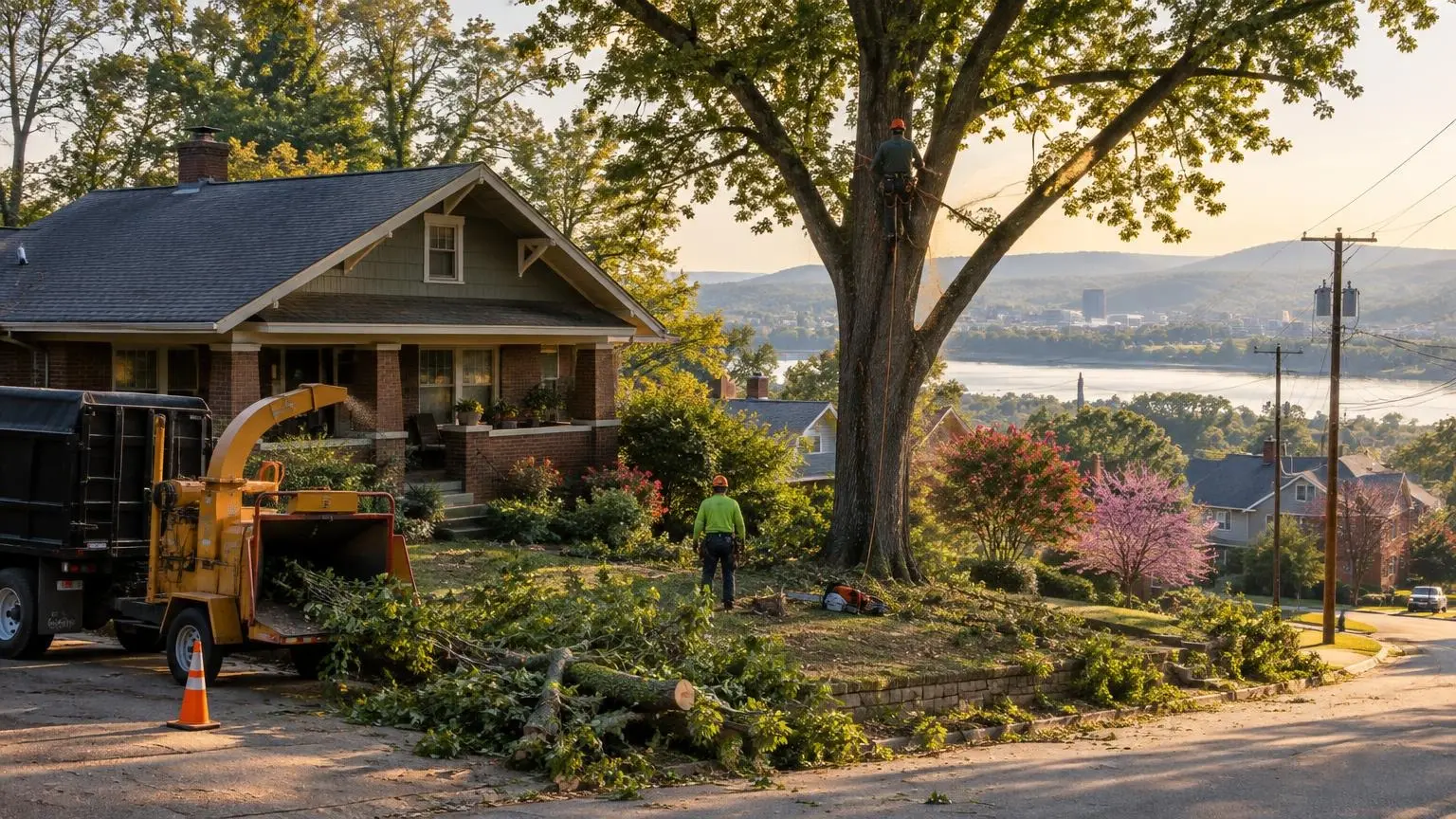
A town named for a single oak
Tree Service in Lonoke, AR
Looking after the planted shade trees of a Grand Prairie county seat.
- Free on-site estimates across Little Rock and central Arkansas
- A clear written price, no lump-sum guessing
- Yard left raked and cleared as agreed
The Lone Oak and the Trees That Followed
Tree Service in Lonoke has a fitting backstory. Local legend says the town was named for a large red oak that stood out while land was being cleared for houses. The name was first Lone Oak, a newspaper misprint turned it into Lonoak, and that became Lonoke. The town was incorporated on January 22, 1872, and is the county seat of Lonoke County.
Prairie trees are planted trees
Lonoke sits in the middle third of Lonoke County, which takes in part of the Grand Prairie, a flat native grassland now known for rice farming. Unlike the hilly, wooded northern end of the county around Cabot, the prairie was largely open ground. Most of the big trees in Lonoke's older neighborhoods were planted around houses, along streets and at the edges of farmsteads. That gives the town a different set of tree problems:
- Exposure. A shade tree standing alone in an open yard takes wind from every side, with nothing upwind to slow it.
- Age. Many planted trees around older homes are now 60 to 100 years old and carrying deadwood.
- Single specimens. When one big tree shades the whole house, losing it matters, so it is worth caring for well.
Pruning a lone shade tree
The aim with a big, exposed yard tree is to keep its shape and reduce what the wind can catch. We remove dead branches, cut back the longest and heaviest limbs to strong side branches, and clean out crossing and rubbing wood. We avoid stripping out the inner branches, a practice sometimes called lion-tailing, because it pushes weight to the limb ends and makes them more likely to snap.
A farm town turned commuter town
Lonoke's economy rested on agriculture for generations. A 1904 demonstration showed that rice could grow on land that had been used for cotton, and falling cotton prices pushed the county toward rice. Eberts Field near town trained Army pilots in both world wars. After Interstate 40 came through, Lonoke became a commuter town for Little Rock, and its 2020 census population was 4,276. Newer homes on former farmland often have few trees; older ones downtown can have several large ones close together.
Water nearby
Bayous cross Lonoke County, including Bayou Two Prairie, which runs from Pulaski County across the county to Bayou Meto. Trees on low ground near bayous and drainage ditches root in wetter soil and can loosen after long rains. If a tree near a ditch or low spot has started to lean, have it looked at before the next storm.
Getting an estimate
Call (501) 457-9035 or use the form to set up a free visit. We will look at your trees, explain what we would do and why, and give you a written price. Get a free estimate
Lonoke History and Land
- Named for an oak. Local legend holds that Lonoke was named for a large red oak found while trees were being cleared for houses; the name went from Lone Oak to Lonoak to Lonoke after a newspaper misprint.
- Grand Prairie setting. The middle third of Lonoke County, including the Lonoke area, takes in part of the Grand Prairie, a flat native grassland now known for rice farming.
- County seat since 1872. Lonoke was incorporated on January 22, 1872, is the seat of Lonoke County and had 4,276 residents in the 2020 census.
- Bayous. Bayou Two Prairie starts in Pulaski County, runs across Lonoke County and empties into Bayou Meto, which forms the county's southeastern boundary.
Lonoke Questions
Our big oak shades the whole house. How often should it be pruned?
For a mature, healthy oak, a careful pruning every three to five years is typical, with checks after major storms. The point is to remove deadwood and reduce heavy limbs before they become a problem.
Is it worth planting a windbreak on an open lot?
On exposed prairie lots it can help, both for comfort and to shelter other trees. Plant it well back from the house and away from lines, and choose species suited to the soil and drainage.
Do you work on farm properties outside town?
Yes. We handle trees around homes, shops, barns and fence lines on rural properties near Lonoke as well as in town.
What is lion-tailing and why avoid it?
It means stripping out most of the inner branches and leaving foliage only at the ends of limbs. It looks tidy, but it puts more weight and wind load at the tips and makes breakage more likely.
Can you clean up after a storm drops limbs across the yard?
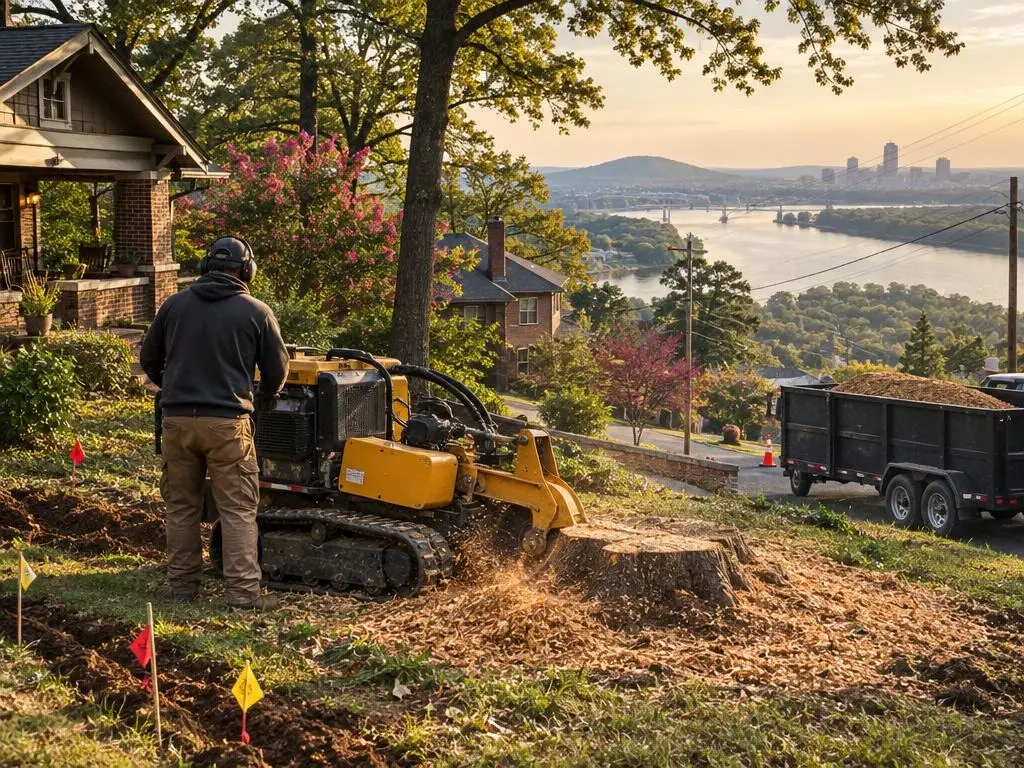
Yes. Call any time and leave the details. We cut up and remove fallen limbs, take down broken hangers still in the tree and grind any stumps left behind.
Free Estimates in Lonoke, AR
Free written estimates in Lonoke and the surrounding farm country.
Tree Service Near Lonoke
- Tree Service in Little Rock, AR
- Tree Service in Pulaski Heights, AR
- Tree Service in Cammack Village, AR
- Tree Service in North Little Rock, AR
- Tree Service in Sherwood, AR
- Tree Service in Jacksonville, AR
- Tree Service in Maumelle, AR
- Tree Service in Roland, AR
- Tree Service in Scott, AR
- Tree Service in Cabot, AR
- Tree Service in Austin, AR
- Tree Service in Ward, AR
- Tree Service in Benton, AR
- Tree Service in Bryant, AR
- Tree Service in Alexander, AR
- Tree Service in Shannon Hills, AR
- Tree Service in Bauxite, AR
- Tree Service in Conway, AR
- Tree Service in Mayflower, AR
- Tree Service in Vilonia, AR